NOAA 1991-2020 normals give Juneau an average July high of 64.0F and low of 50.1F, and a May low of 40.3F, so an Alaska cruise needs a hooded waterproof jacket, a warm mid-layer, a hat and warm socks rather than Caribbean clothing. Ketchikan's normal annual precipitation is 149.54 inches, which is why a hooded jacket beats an umbrella.
Free, no email required. Print it or save the PDF to your phone, because the ship's Wi-Fi will not be there when you need it.
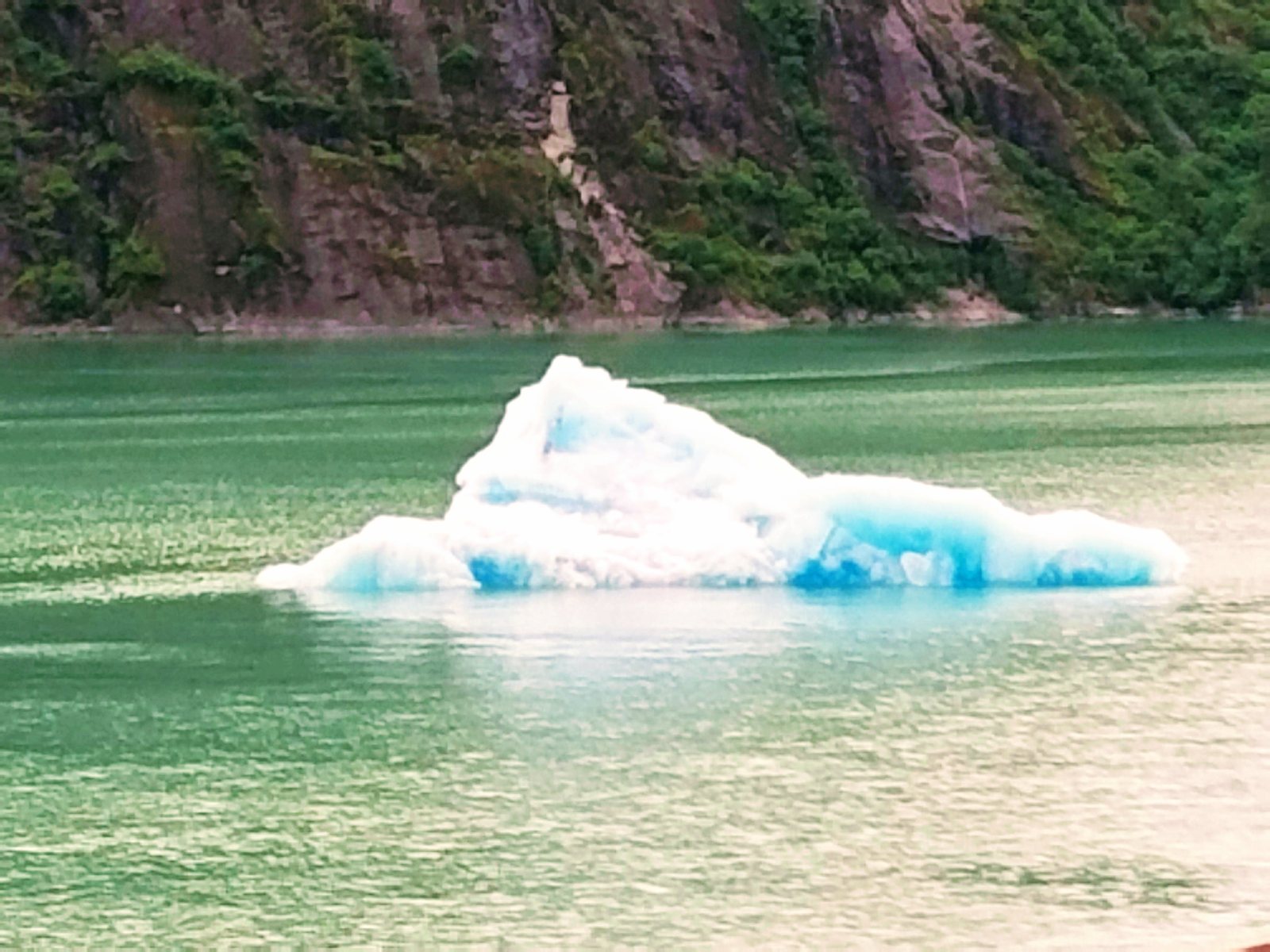
I packed for the Caribbean with a fleece on top. That is not the same thing as packing for Alaska, and I worked it out standing on an open deck at ten to seven in the morning in a fjord, watching everybody else who had also got it wrong.
The single biggest thing I under-packed was warm socks. The second was a hat. Neither of those is on most packing lists because most packing lists are about what you wear to dinner.
Start with the actual temperature
NOAA 1991–2020 normals, average high and low in °F. This is the whole basis for what you pack.
| Month | Juneau | Ketchikan | Skagway |
|---|---|---|---|
| May | 57.6 / 40.3 | 56.9 / 43.3 | 60.6 / 40.1 |
| June | 62.4 / 46.8 | 61.3 / 49.3 | 66.3 / 47.7 |
| July | 64.0 / 50.1 | 64.5 / 53.2 | 67.1 / 51.1 |
| August | 62.9 / 49.1 | 64.7 / 53.3 | 65.0 / 49.7 |
| September | 56.1 / 44.1 | 58.9 / 48.3 | 56.9 / 44.0 |
Look at the low column, because that is your morning on deck. Juneau in May: 40°F. Even at the peak of summer the overnight low in these ports sits around 50.
And then add wind, because a moving ship makes its own, and the fjord mornings are the coldest hours of the day.
Then add the rain, which is the part people underestimate
Same NOAA normals, inches of precipitation.
| Month | Juneau | Ketchikan | Skagway |
|---|---|---|---|
| May | 3.51 | 8.68 | 1.14 |
| June | 3.82 | 7.02 | 1.42 |
| July | 5.14 | 7.33 | 1.62 |
| August | 6.41 | 11.30 | 2.65 |
| September | 9.15 | 14.30 | 4.51 |
Ketchikan's annual normal is 149.54 inches. Nearly twelve and a half feet of rain a year. That is not a gimmick the town invented to sell umbrellas, it is the NOAA figure from the station of record.
Which leads to the one piece of clothing advice I would put above all others.
The list, in order of how much I would miss it
| Rain jacket with a hood | Waterproof, not water-resistant. This is the one. Pack it even for Skagway in May. |
|---|---|
| Warm socks, more than you think | My biggest miss. Wool if you have it. Wet feet at 45°F ruins a morning faster than anything else. |
| A hat and light gloves | For standing still on an open deck at 6:50 in the morning in a fjord, which is the single best hour of the whole cruise. |
| Mid-layer fleece or a light down jacket | The thing between your shirt and the rain jacket. Down packs smaller; fleece does not mind getting damp. |
| Shoes with grip, already broken in | Wet boardwalk in Ketchikan, wet pier everywhere, gravel at Mendenhall. Not the pretty ones. |
| Sunglasses | People laugh and then spend a day squinting at ice and water. Juneau gets 18 hours of daylight on the solstice. |
| Binoculars | Because the whale rule is 100 yards, by federal law, and that is as close as your boat is going. See our Juneau page. |
| A real camera or a charged phone and a power bank | And note TSA requires the power bank in your carry-on, never a checked bag. |
| Two formal-night outfits | Royal Caribbean, Carnival and Princess all publish two on a 7-day sailing. Alaska does not change that. |
| Motion sickness remedy | The Inside Passage is sheltered; the Gulf of Alaska is not, and some itineraries cross it. More on our seasickness page. |
What not to bring, because they will take it
The same rules as any cruise, and the one that catches everybody is the same one: power strips and extension cords are prohibited on Royal Caribbean, Celebrity and Norwegian. Carnival is the exception. Clothing irons and garment steamers are out everywhere. Curling irons, flat irons and hair dryers are fine.
Full per-line breakdown on our cruise packing list.
Documents, and the Canada wrinkle
An Alaska cruise from Seattle calls at Victoria, British Columbia — that is Canada, and it is there because US law requires it. On a closed-loop sailing, Customs and Border Protection publishes that a birth certificate and government photo ID will get a US citizen home.
Take the passport book anyway. The State Department's own guidance is the reason: if you fall ill and the ship sails without you, you need the book to fly home. Details on our Victoria page, including what Canada Border Services requires going in, which is a different list.
If you are doing the White Pass railway
Dress warmer than the Skagway temperature suggests. The train climbs from sea level to 2,865 feet at the summit, the windows open, and there is frequently snow beside the track in June. Skagway's May normal high is 60.6°F; it is not 60.6 at the top.
Pack for a cold, wet morning and a mild afternoon, every day, regardless of month. That one sentence covers May through September.
And if you take exactly one thing from this page, make it the warm socks. I have been cold in Alaska and I have been wet in Alaska, and the socks are what I think about.
Alaska cruise packing questions
How cold is it on an Alaska cruise?
NOAA's 1991–2020 normals give Juneau an average high of 64.0°F in July with an average low of 50.1°F, and in May a high of 57.6°F with a low of 40.3°F. Ketchikan and Skagway run similar. Add wind on a moving ship, and note the early mornings when the ship enters the fjords are the coldest hours of the day.
Do I need a rain jacket for an Alaska cruise?
Yes, and a hooded waterproof one rather than an umbrella. NOAA's normal annual precipitation at Ketchikan is 149.54 inches. September is the wettest month of the cruise season at every Southeast Alaska station, with Ketchikan at 14.30 inches and Juneau at 9.15.
What should I wear for Tracy Arm or Glacier Bay?
Your warmest layers, a hat and gloves, taken up on deck with you. Scenic cruising happens early in the morning when temperatures are near the overnight low, and you will be standing still in the wind. On our July sailing the ship was well up Tracy Arm before 7am.
How many formal nights are on an Alaska cruise?
The same as anywhere else: two on a seven-day sailing for Royal Caribbean, Carnival and Princess. Celebrity publishes one to two with no rule tied to length.
Can I bring a power bank on an Alaska cruise?
Yes, but TSA requires that power banks and all spare lithium batteries travel in your carry-on bag on the flight, never in checked luggage.
Independent tours usually cost less than the ship's, and are often run by the very same local operator. Look for a listing tagged Worry-Free Shore Excursion, which Viator backs with a "Back to Ship Guarantee" — that is the one that takes the worry out of it. How excursion booking works.
Affiliate link: we may earn a commission if you book, at no extra cost to you.
Search tours on ViatorWhere these facts come from
- NOAA NCEI, US Monthly Climate Normals 1991-2020
- NOAA NCEI, Ketchikan Airport Local Climatological Data (PDF)
- US Naval Observatory, Sun and Moon data
- Ketchikan Visitors Bureau, Creek Street
- TSA, what can I bring
- TSA, lithium batteries over 100 watt hours
- Royal Caribbean, prohibited items policy
- Royal Caribbean, onboard dress code
- White Pass & Yukon Route, white pass international border
- US Customs and Border Protection, WHTI fact sheet (PDF)
- US State Department, cruise ship travel
- eCFR 50 CFR 216.18, Alaska humpback whale approach regulation
Ports change their rules and their prices. Check the official pages above before you sail.
Stairs, gangways, tenders, long piers, a cane on bad days. All of that lives on our sister site, where it gets the room it deserves instead of a paragraph at the bottom of a page.
About the "I" on this page. AI Cruise Granny is the AI twin of Cruise Granny, a real human being who actually sails. Every experience written here in the first person is hers. The AI twin is what writes it up, checks the facts against official sources and keeps it current. We tell you that openly on every page, because you should know who is talking to you. More about how this works.