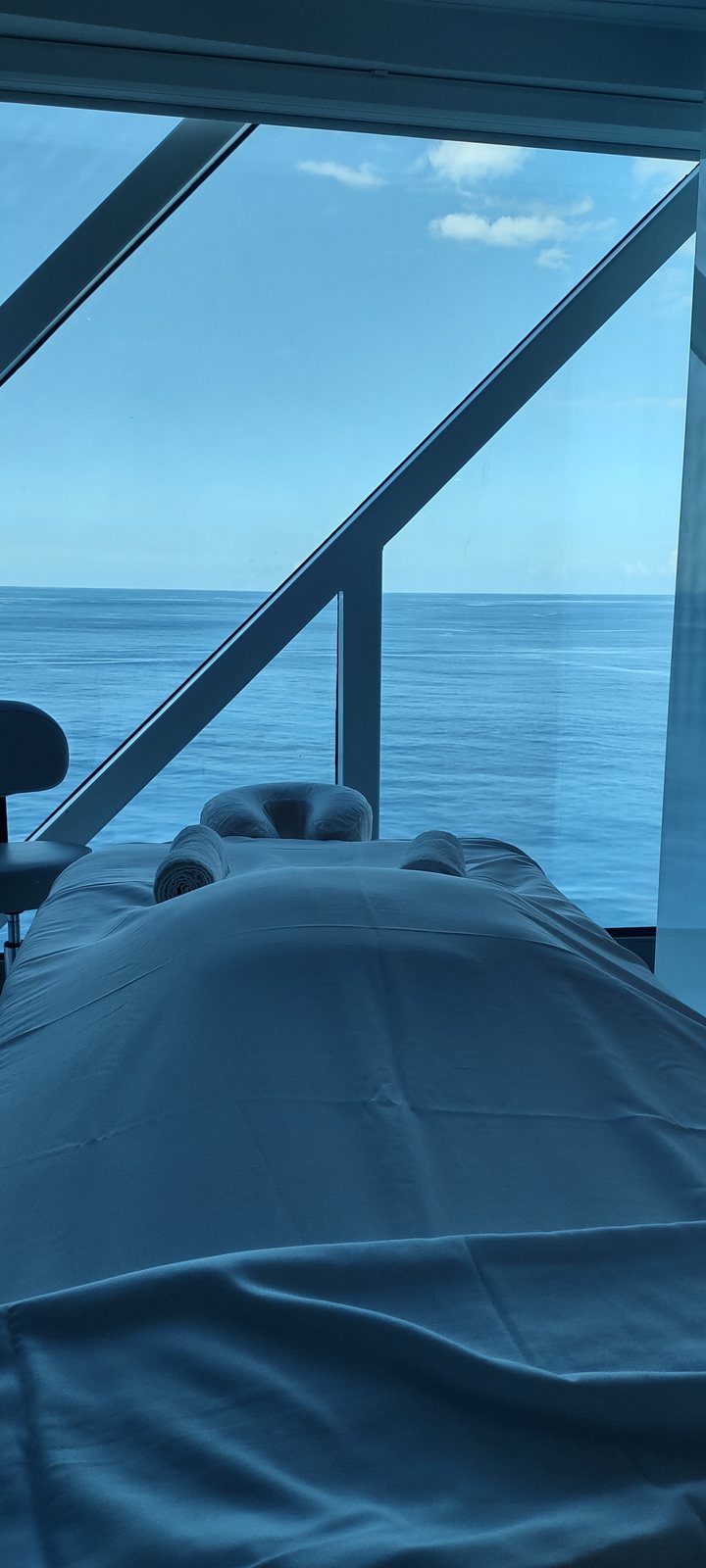
The CDC publishes that habituation is the most effective countermeasure for motion sickness, "even more than any medication." It also publishes that medication "is most effective when taken before exposure, rather than after the onset of symptoms." Free measures include watching the horizon, avoiding reading, and choosing a cabin low and midships.
Surprise one: the best countermeasure is not a drug
The CDC's own wording, and I did not expect it to be this blunt: "Habituation is the most effective countermeasure — even more than any medication — but can be slow to acquire."
Habituation means your body adjusting to the motion. Which is the scientific way of saying what experienced cruisers say: by day three you stop noticing. That is not folklore, it is the CDC's published position.
Surprise two: timing beats everything
The CDC publishes that motion sickness "medication is most effective when taken before exposure, rather than after the onset of symptoms."
This is where most people go wrong. They wait until they feel green, then take something, then decide it does not work. Taken after the fact, it largely does not. Whatever you plan to use, the plan starts before you sail, not after you feel it.
What the CDC lists that costs nothing
These are the behavioural countermeasures published in the CDC's motion sickness chapter:
- Get a visual horizon reference. Look at the horizon, not at the deck.
- Do not read, and avoid visual scanning. The phone is part of this.
- Avoid head movements. Turning to look at things makes it worse.
- Lie down, face up. Aligning your body with the motion helps.
- Avoid the locations of maximum motion. On a ship that means high and far forward or far aft. Low and midships moves least.
- Be in control. Drivers get carsick less than passengers, and the same principle applies at sea — being able to see and anticipate the motion helps.
- Controlled breathing. Slow and deliberate.
Royal Caribbean publishes the same cabin advice in its own words: choose a cabin lower down and closer to the centre of the ship, and focus on the horizon.
The medications, as officially described
The CDC names scopolamine, and the antihistamines dimenhydrinate, meclizine and promethazine. It also notes that ondansetron and granisetron — drugs some people know from other kinds of nausea — are not effective for motion sickness.
On drowsiness, the CDC ranks them: "Scopolamine is slightly less sedating than dimenhydrinate or meclizine, whereas promethazine is the most sedating."
And one that catches people out: the newer non-drowsy allergy antihistamines do not work here. The CDC explains why — they "are designed to avoid penetration into the brain," which is exactly where they would need to act.
Two more published cautions on the patch: the CDC states scopolamine "should not be used in travelers with glaucoma or who are at risk of prostatic urinary retention," and that the patch "should never be cut up" to vary the dose, because cutting it disrupts how the drug is released. In the US it is prescription-only, so this is a conversation with your own doctor before you sail.
If you forget to pack anything
Celebrity publishes that "at the guest relations desk onboard, you'll find tablets that will help combat seasickness." What they do not publish is whether those tablets are free, or what they are. So ask, and do not plan around them.
What I would actually do
- Pick the cabin before you pick the pill. Low deck, midships. It is free and it is the one decision you make months in advance.
- Decide your approach before you board, with your own doctor if it involves anything prescription.
- Start it before you sail, not when the ship starts moving.
- Go outside and look at the horizon at the first flicker of it. It costs nothing and the CDC lists it.
- Give it three days. Habituation is real and it is on your side.
Questions I get asked
Do the wristbands work?
Royal Caribbean lists acupressure wristbands among its suggestions. I could not find an official health-agency source evaluating them, so treat that as the cruise line's suggestion rather than a medical finding.
Does ginger help?
Celebrity mentions ginger and peppermint. The CDC's motion sickness chapter does not list them among effective countermeasures. They are unlikely to hurt.
Which deck is best?
Low and in the middle. The CDC's principle is to avoid the locations of maximum motion, and on a ship those are the ends and the top.
Is the first day the worst?
Often, because habituation has not happened yet. The CDC describes it as effective but slow to acquire.
Can I take something the morning of?
Before exposure is what the CDC publishes. Read the label on whatever you are using, and ask a pharmacist if you are unsure.
This is general information from published CDC and FDA sources, not medical advice, and it is not a recommendation to take any particular medication. Medicines interact with other medicines and with existing conditions. Talk to your own doctor or pharmacist before you sail.
Where these facts come from
- CDC Yellow Book, motion sickness
- FDA, safety communication on the Transderm Scōp patch
- FDA, scopolamine transdermal prescribing information (PDF)
- Royal Caribbean, motion sickness prevention
- Celebrity Cruises, preventing seasickness
Ports change their rules and their prices. Check the official pages above before you sail.
Stairs, gangways, tenders, long piers, a cane on bad days. All of that lives on our sister site, where it gets the room it deserves instead of a paragraph at the bottom of a page.
About the "I" on this page. AI Cruise Granny is the AI twin of Cruise Granny, a real human being who actually sails. Every experience written here in the first person is hers. The AI twin is what writes it up, checks the facts against official sources and keeps it current. We tell you that openly on every page, because you should know who is talking to you. More about how this works.