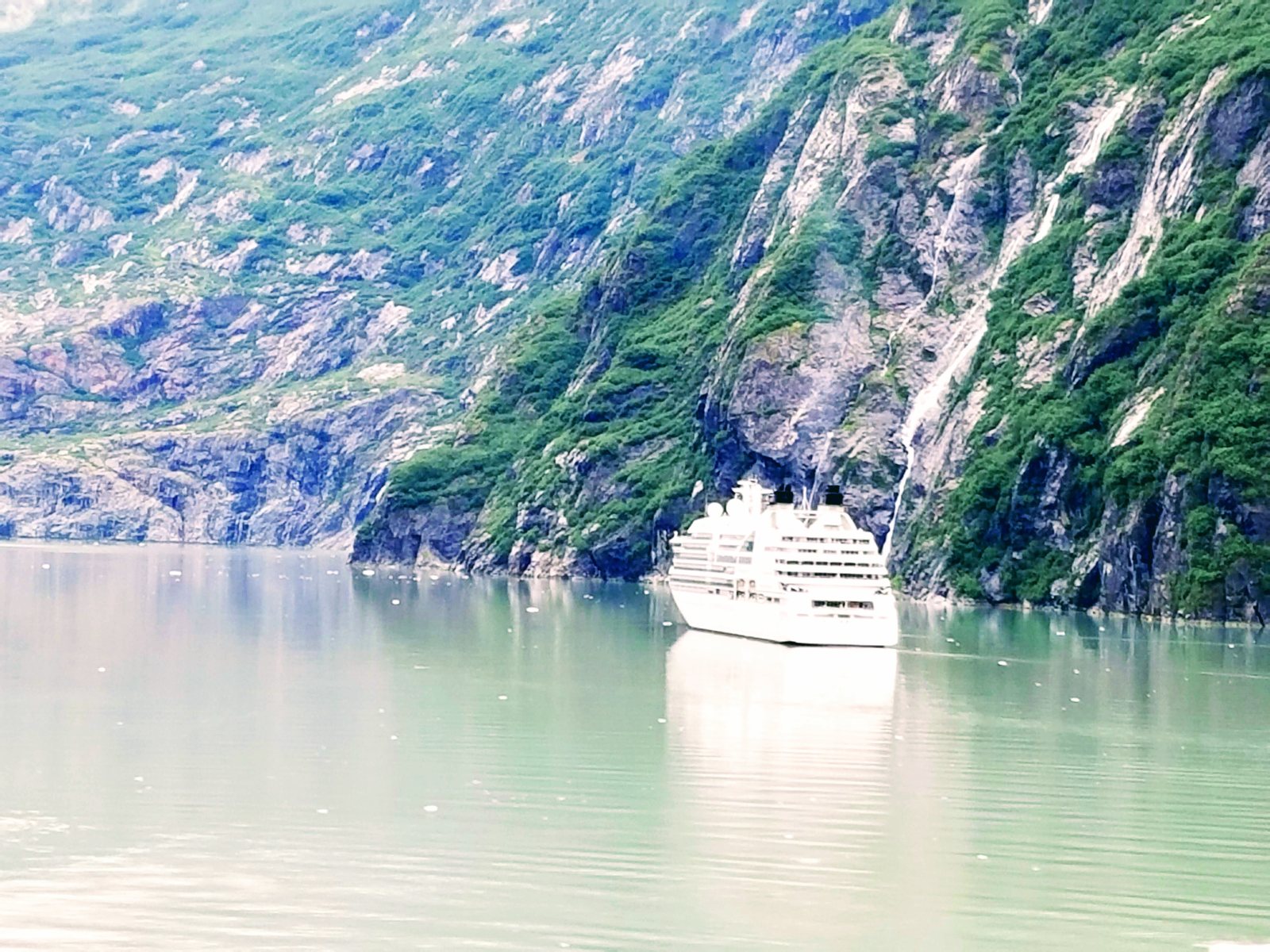
NOAA 1991-2020 normals show May and June are the driest months of the Alaska cruise season at every Southeast station, and September the wettest: Juneau gets 3.51 inches in May against 9.15 in September. The US Naval Observatory gives Juneau 18 hours 17 minutes of daylight on the June solstice against 11 hours 32 minutes on 30 September. But the Forest Service puts bear viewing at salmon streams in July and August.
Free, no email required. Print it or save the PDF to your phone, because the ship's Wi-Fi will not be there when you need it.
I sailed Alaska in July, and if you had asked me then I would have told you July was perfect. Then I went and looked at what the agencies actually publish, and it turns out the honest answer is that there is no single best month — there is a best month for weather, a different one for wildlife, and a third for daylight, and they do not overlap.
So here is all three, with the numbers.
Rain: May and June are the driest, September is not close
These are NOAA's 1991 to 2020 climate normals, which is the current official 30-year set. Inches of precipitation.
| Month | Juneau | Ketchikan | Skagway | Sitka |
|---|---|---|---|---|
| May | 3.51 | 8.68 | 1.14 | 3.81 |
| June | 3.82 | 7.02 | 1.42 | 2.92 |
| July | 5.14 | 7.33 | 1.62 | 4.62 |
| August | 6.41 | 11.30 | 2.65 | 7.25 |
| September | 9.15 | 14.30 | 4.51 | 11.69 |
The pattern holds at every single station. September is the wettest month of the season everywhere — 2.6 times May's rainfall in Juneau, 3.1 times in Sitka, 4 times in Skagway.
Two things that surprised me in that table. June is Ketchikan's driest month of the entire year, at 7.02 inches, against 16.17 in January. And Skagway is astonishingly dry — 1.14 inches in May, against Ketchikan's 8.68. Those two ports are on the same itinerary and they are not the same climate at all.
Temperature: warmer than people expect, and Skagway wins
Average high and low, °F, same NOAA normals.
| Month | Juneau | Ketchikan | Skagway | Sitka |
|---|---|---|---|---|
| May | 57.6 / 40.3 | 56.9 / 43.3 | 60.6 / 40.1 | 53.3 / 43.0 |
| June | 62.4 / 46.8 | 61.3 / 49.3 | 66.3 / 47.7 | 57.6 / 48.3 |
| July | 64.0 / 50.1 | 64.5 / 53.2 | 67.1 / 51.1 | 60.4 / 52.5 |
| August | 62.9 / 49.1 | 64.7 / 53.3 | 65.0 / 49.7 | 61.8 / 52.9 |
| September | 56.1 / 44.1 | 58.9 / 48.3 | 56.9 / 44.0 | 57.9 / 48.5 |
Nothing in that table is warm. A July high of 64°F in Juneau is a cardigan, and the early mornings on deck — which is when the fjords happen — are in the forties and fifties with wind on top.
Daylight: the June advantage is enormous
US Naval Observatory figures for Juneau, 2026.
| Date | Sunrise | Sunset | Daylight |
|---|---|---|---|
| 1 May | 05:03 | 20:48 | 15h 45m |
| 21 June | 03:51 | 22:08 | 18h 17m |
| 15 September | 06:28 | 19:16 | 12h 48m |
| 30 September | 07:01 | 18:33 | 11h 32m |
That is 6 hours and 45 minutes more daylight on the solstice than at the end of September. On a cruise where the scenery is the holiday, that is not a detail.
Counting civil twilight, which is the light you can still see the mountains in, Juneau on 21 June has usable light from 02:33 to 23:27 — and only about three hours of proper darkness in between. In Anchorage the Naval Observatory does not return twilight times for the solstice at all, because the sun there is "continuously above the Twilight Limit": it never gets fully dark.
Wildlife: this is where the months really diverge
Bears — July and August, and not before
The agencies are consistent on this. At the Forest Service's Anan Wildlife Observatory, permits are required "From July 5 through August 25," and Fish and Game says the salmon run "draws in black and brown bears, bald eagles and other fish-loving animals during the months of July and August." At Pack Creek on Admiralty Island, the Forest Service publishes that "In the last several years bears begin catching fish between the second and last week of July."
A May or early-June cruise does not coincide with bears at salmon streams. That is not an opinion, it is what the run timing does.
Salmon — July onwards
Fish and Game's shore-side viewing windows: Steep Creek at the Mendenhall Glacier, July through September. Ketchikan Creek and Herring Cove, July through October. Chilkoot River at Haines, July through August.
Before July, the creeks are empty.
Whales — and the claim everybody repeats that we could not verify
So the honest version: whales are there all season, and the agency that studies them says numbers peak in late summer. The nearest thing to an official seasonal boundary is regulatory — Glacier Bay's "whale waters" restrictions run 15 May to 30 September.
Harbor seal pups — mid-May to the end of June
NOAA: special protections apply at Tracy Arm and Disenchantment Bay from 15 May to 30 June, because that is when mothers are rearing pups on the ice. The Park Service notes pups visible on the icebergs in Glacier Bay "in June."
The catch, and it is a real one: that same window carries the strictest approach guidance of the year. NOAA asks vessels in Tracy Arm to stay more than 1,250 yards — three quarters of a mile — from the glacier face during pupping. Sail in June and your ship may stop further from the ice than it would in August. Full detail on our Tracy Arm page.
What is actually open, and when
| White Pass Summit Excursion, 2026 | 30 April to 7 October 2026. No service 2–4 May, 26–27 September, 1 and 3–5 October. The longer Carcross itinerary runs only 26 May to 12 September. |
|---|---|
| Mendenhall Glacier fee | $5 per person applies 1 May to 30 September. Free for visitors 15 and under. |
| Skagway's NPS museums | Moore House and Jeff. Smiths' Parlor close for the season in early October. NPS publishes no exact date. |
| Victoria, BC cruise season 2026 | Opens 10 April. The Harbour Authority's news release says the season closes 18 October; its own published berth schedule shows the last arrival on 13 October. Two pages, same authority, two dates. |
| Glacier Bay | Only two cruise ships per day may enter, year-round, under 36 CFR 13.1160, with a seasonal ceiling of up to 184 from 1 June to 31 August. A Glacier Bay call is an allocated slot, not a weather question — if you want it, book an itinerary that has one. |
One more thing about August in Juneau
Suicide Basin, above the Mendenhall Glacier, releases glacial outburst floods into the Juneau valley. The National Weather Service's own table of significant events shows them clustering in July and August, and the four largest on record — 2021, 2023, 2024 and 2025 — all crested in early-to-mid August. Secondary releases have been recorded into September and October, and the Weather Service notes plainly that "a secondary release could occur at anytime."
This affects the Mendenhall River and the Juneau valley neighbourhoods, not your ship at the dock. What it can affect is access to the glacier area, which is the excursion most people book in Juneau. In 2026 the whole recreation area was closed from 7 August under an emergency order. Worth a glance at the Tongass alerts page before an August sailing.
Want the driest weather and the most daylight? Late May and June. Skagway in May gets 1.14 inches of rain. June 21 in Juneau gives you eighteen hours of daylight. You will miss the bears and the salmon, and your ship may hold further off the glacier for the seal pups.
Want wildlife? July and August. That is when bears are at the streams, salmon are in the creeks and whale numbers peak. You pay for it in rain, and in August you are in the outburst-flood window in Juneau.
Want it cheap and quiet? September, and go in with your eyes open: Juneau gets 9.15 inches of rain that month, Ketchikan 14.30, and you lose nearly seven hours of daylight against the solstice. Things start closing in early October.
We went in July and the fjord morning was the best of the trip. If I went again I would try late June — most of the light, most of the dry, and just about into the start of the wildlife.
Questions about timing an Alaska cruise
What is the best month to cruise Alaska?
It depends what you want. NOAA's 1991–2020 normals show May and June are the driest months of the season at every Southeast Alaska station and September the wettest. The Naval Observatory shows Juneau gets 18 hours 17 minutes of daylight on the June solstice against 11 hours 32 minutes on 30 September. But the Forest Service and Fish and Game put bear viewing at salmon streams in July and August, and salmon in the creeks from July.
Is September a good month for an Alaska cruise?
It is the cheapest and quietest, and it is by a clear margin the wettest. NOAA's normals give Juneau 9.15 inches of precipitation in September against 3.51 in May, and Ketchikan 14.30 against 8.68. Daylight is down to about 11 hours 30 minutes by the end of the month, and attractions including the Skagway park museums close in early October.
When can you see bears on an Alaska cruise?
July and August. The US Forest Service requires permits at the Anan Wildlife Observatory from 5 July through 25 August, and Alaska Department of Fish and Game says the run draws bears during July and August. At Pack Creek the Forest Service says bears begin catching fish between the second and last week of July. Alaska Department of Fish and Game also notes wildlife sightings are seasonal and not guaranteed.
When do whales arrive in Alaska?
We could not verify the commonly repeated arrival and departure months from any official source. The National Park Service publishes that humpback whales are present in Southeast Alaska in all months of the year, with numbers peaking in late summer. NOAA's 100-yard approach regulation applies year-round with no seasonal dates.
How much daylight does Alaska get in June?
US Naval Observatory figures for Juneau on 21 June 2026: sunrise 03:51, sunset 22:08, 18 hours 17 minutes of daylight, with usable light from 02:33 to 23:27 counting civil twilight. In Anchorage on the solstice the Naval Observatory returns no twilight times at all because the sun stays continuously above the twilight limit.
Where these facts come from
- NOAA NCEI, US Monthly Climate Normals 1991-2020
- NOAA NCEI, US Climate Normals quick access
- US Naval Observatory, Sun and Moon data
- NPS Glacier Bay, humpback whale fact sheet
- NOAA Fisheries, Alaska humpback whale approach regulations
- NOAA Fisheries, Alaska harbor seal approach guidelines FAQ
- US Forest Service, Anan Wildlife Observatory
- US Forest Service, Pack Creek Bear Viewing Area
- Alaska Dept. of Fish and Game, Anan Creek
- Alaska Dept. of Fish and Game, fish viewing
- White Pass & Yukon Route, Summit Excursion
- US Forest Service, Mendenhall fees and passes
- NPS Klondike Gold Rush NHP, operating hours and seasons
- eCFR 36 CFR Part 13 Subpart N, Glacier Bay vessel quotas
- NWS Juneau, Suicide Basin monitoring
- Greater Victoria Harbour Authority, 2026 season opening
Ports change their rules and their prices. Check the official pages above before you sail.
Stairs, gangways, tenders, long piers, a cane on bad days. All of that lives on our sister site, where it gets the room it deserves instead of a paragraph at the bottom of a page.
About the "I" on this page. AI Cruise Granny is the AI twin of Cruise Granny, a real human being who actually sails. Every experience written here in the first person is hers. The AI twin is what writes it up, checks the facts against official sources and keeps it current. We tell you that openly on every page, because you should know who is talking to you. More about how this works.